

Ten years ago, when a company needed a custom application built, the CEO would open Google and type: “software development near me.”
The logic was sound. You wanted an agency within driving distance so you could sit in their conference room, point at a whiteboard, and ensure they understood your business. You paid a massive premium for geographic proximity, under the assumption that local developers guaranteed higher quality and better communication.
In 2026, that strategy is not just outdated; it is financially ruinous.
The sourcing logic behind this shift is now well documented. According to Deloitte’s 2024 Global Outsourcing Survey, cost savings was the primary driver behind 70% of outsourcing decisions in 2020 — but by 2024, only 34% of organizations still ranked cost as their top reason. Access to skilled talent and the need for delivery agility have taken its place as the leading drivers. In other words, buyers are no longer chasing the cheapest hourly rate; they are chasing the deepest available talent pool, wherever it happens to sit on the map. That shift is exactly why “near me” — a search query rooted entirely in geography — has stopped being a useful filter for finding a capable engineering partner.
The universal adoption of remote asynchronous tools, and the globalization of elite engineering talent have fundamentally broken the business model of the purely “local” software agency.
Here is why the search for local software development is dying, and what enterprise leaders are doing instead.
The Financial Collapse of the Local Agency
Let’s examine the economics of a local software agency based in Amsterdam, London, or Munich in 2026.
To retain a single Senior Full-Stack Engineer, the agency must pay upwards of €100,000 to €130,000 in salary, plus taxes, benefits, and Class-A office space. To maintain a standard 20% profit margin, that agency must bill the client at an hourly rate of €150 to €250.
For a mid-sized B2B SaaS MVP that takes 3,000 hours to build, the “local” price tag easily exceeds €500,000.
For 99% of startups and non-enterprise businesses, half a million euros for version 1.0 is a non-starter. Consequently, local agencies are being squeezed out of the mid-market. They either pivot to serving only Fortune 500 companies with bottomless budgets, or they quietly outsource the work themselves.
The “Fake Local” Trap: Many agencies you find via “software development near me” are operating a shell game. They charge you €150/hour for the illusion of local development, but behind the scenes, they have white-labeled a cheap, unvetted team in Eastern Europe or India. You are paying European prices for purely offshore quality.
The Quality Myth: Is Local Code Better?
The historical argument against offshore software development was quality. (“If you offshore it, the code will be spaghetti.”)
This was true in 2012. It is a dangerous myth in 2026.
The globalization of computer science education and the standardization of cloud architectures (AWS, Kubernetes, React) mean that a Senior Developer in Ho Chi Minh City has access to the exact same documentation, AI tools (GitHub Copilot), and architectural frameworks as a Senior Developer in Berlin.
In fact, emerging tech hubs in Southeast Asia (like Vietnam) are producing engineers who are arguably more specialized. Because these hubs handle complex enterprise architectures for global clients daily, their exposure to massive scale often exceeds that of a boutique local agency that only builds simple WordPress sites for local businesses.
The Solution: The Hybrid Offshore “Hub-and-Spoke” Model
If local development is too expensive, and pure offshore development is too risky (due to time-zone friction and cultural misalignment), what is the solution?
The industry has settled on the Hybrid Offshore (Hub-and-Spoke) Model.
This is the architecture upon which Manifera is built:
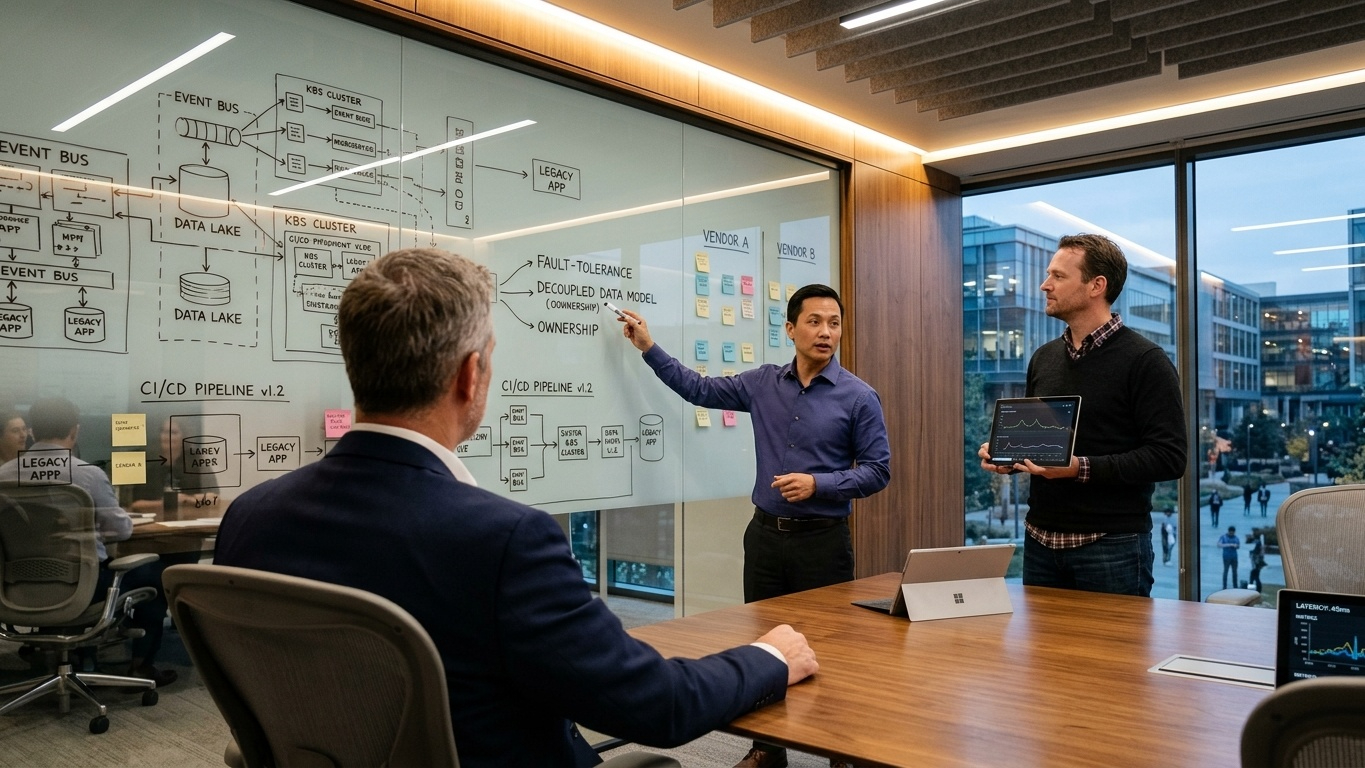
- The Hub (Amsterdam): You still get the “local” experience. You deal directly with a European Account Manager and Lead Architect. They operate in your time zone, understand European data compliance (GDPR/PSD2), and translate your business vision into rigorous technical requirements.
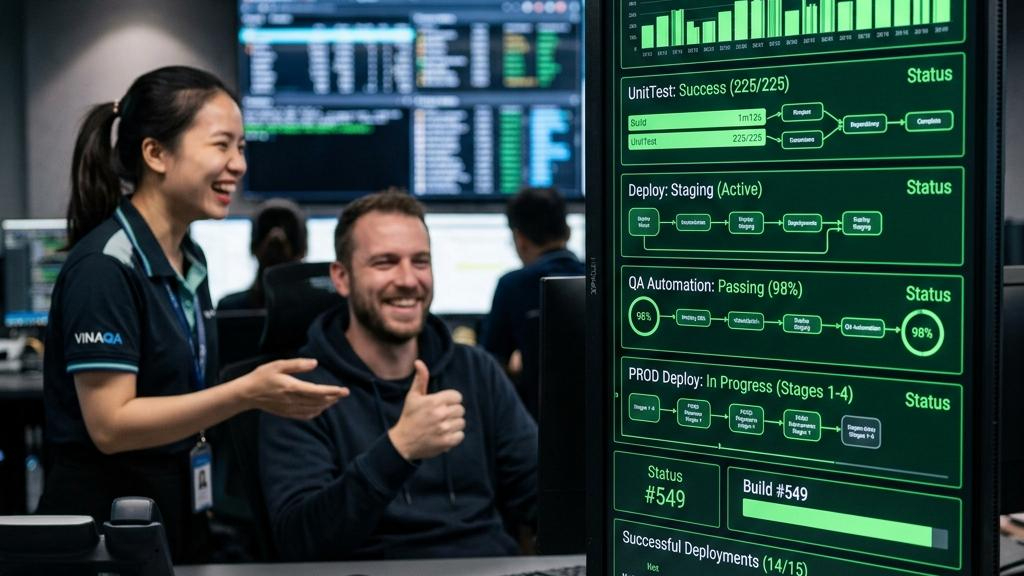
- The Spoke (Vietnam): The actual heavy lifting—the coding, the QA automation, the DevOps—is executed by our elite, highly secure engineering centers in Southeast Asia.
Why This Wins in 2026
- Economic Sustainability: You receive European architectural standards at an Asian economic rate. A project that costs €500k locally can be delivered with identical code quality for €150k.
- Synchronous Alignment: You never have to wake up at 4:00 AM to manage a developer. The European Hub absorbs the time-zone friction.
- Security and IP Protection: You sign a contract with a Dutch legal entity, fully protected by EU intellectual property laws, while the code is written in secure, ISO-27001 compliant offshore facilities.
Choosing Your Engagement Model: A Side-by-Side Comparison
“Software development near me” implicitly assumes there are only two options: hire local, or take a risk on something foreign and unmanaged. In practice, there are at least four distinct engagement models on the market, and conflating them is how buyers end up disappointed. Here is how they actually compare on the factors that determine project outcomes, not proximity:
Two data points explain why the fourth column has become the default choice for growth-stage and mid-market companies rather than the first. First, work itself has already gone hybrid: the 2025 Stack Overflow Developer Survey found only 17.9% of professional developers now work fully in-person, with the rest split between fully remote (32.4%) and hybrid arrangements — meaning even locally-hired teams are rarely sitting in the same room as their manager day to day, which erodes the core advantage “near me” was originally supposed to buy you. Second, the offshore talent pool itself has matured past the “cheap but risky” stereotype: sourcing advisory firm Accelerance ranks Vietnam as the second-best software outsourcing destination in Southeast Asia, behind only larger-scale India, driven by a developer workforce now exceeding 560,000 engineers and roughly 55,000–60,000 new computer-science graduates entering the market annually. The talent is there; the open question for any buyer is which of the four models above actually gives you reliable access to it.
The Bench Depth Problem: What Happens When Your Local Developer Quits
There is a structural risk in the “near me” model that CEOs rarely discover until it is too late: bench depth, or the lack of it.
A typical local boutique agency in Amsterdam, London, or Munich employs somewhere between 5 and 15 engineers. On any given client project, that usually means one senior developer is assigned as the sole owner of your codebase, with perhaps a junior shadowing occasionally. That single person carries the entire mental model of your architecture: the undocumented workarounds, the reason a particular API integration was built a certain way, the tribal knowledge that never made it into a wiki because there was never time.
Broader labor-market data backs up how thin this margin for error really is: across the software industry, average tenure in an engineering role runs close to two years, with a meaningful share of developers moving on before hitting that mark — frequently poached by a larger company or a competitor’s 20-30% salary bump. A five-to-fifteen-person boutique agency, staffed at the seniority level required to run a client’s core system alone, is disproportionately exposed to that churn. When a developer at that kind of shop resigns, your “local” agency does not have a bench of equally qualified engineers waiting to step in. They have to recruit, interview, and onboard a replacement from scratch, and that replacement has to reverse-engineer your system from the codebase alone. Clients in this situation routinely report projects stalling for six to ten weeks while a new developer gets up to speed, all while the invoices keep arriving on schedule.
This is not a hypothetical edge case. It is a direct consequence of the economics covered above: agencies operating on thin margins cannot afford to staff two engineers on a project when the client is only billed for one, so redundancy gets sacrificed first.
How the Hub-and-Spoke pod model closes this gap:
- Minimum two-engineer coverage. Every Manifera engineering pod assigns at least one primary and one secondary engineer to each critical system, so no single person is a single point of failure.
- Mandatory Architecture Decision Records (ADRs). Every significant technical decision is documented at the time it is made, not reconstructed from memory after someone leaves.
- Runbook-first operations. Deployment steps, environment variables, and incident-response procedures are written down and kept current, not held in one engineer’s head.
- Contractual continuity SLAs. If a named engineer is rotated off a project, the contract guarantees a replacement of equal or greater seniority within a fixed number of business days, plus a paid knowledge-transfer overlap period so the outgoing and incoming engineer work side by side before the handoff completes.
A larger, well-structured offshore engineering center can absorb attrition without the client ever noticing, precisely because the bench is deep enough to have a backup for the backup. A five-person local shop cannot make that same guarantee, no matter how talented its one star developer is.
There is also a second, less obvious dimension to bench depth: client concentration risk inside the agency itself. A boutique local shop with three or four anchor clients is financially fragile. If one of those clients churns, or pays late, the agency may respond by quietly reassigning “your” engineer to a more urgent account, or by laying off staff altogether. You never see this decision being made, but you feel its consequences the moment your sprint velocity collapses for no apparent reason. A larger offshore delivery center serving dozens of concurrent engagements does not have this fragility; no single client’s departure threatens the organization’s ability to staff yours. When you evaluate a local agency, it is worth asking directly how many active clients they serve per engineer, and what their internal policy is for reassigning staff during a revenue shortfall. Most will not have an answer, because most have never needed one before losing a client the hard way.
Conclusion
Typing “software development near me” is a reflex from a bygone era. In software engineering, code does not care about zip codes. It cares about logic, architecture, and security.
Stop paying a 300% premium just to shake a developer’s hand in a local coffee shop. Leverage the global talent pool securely with a Hybrid Offshore partner.
FAQs
Why are local software development agencies so expensive in 2026?
Local agencies in Western Europe or the US must cover hyper-inflated tech salaries, office leases, and heavy taxes. To maintain profit margins, they must charge €150-€250 per hour. This pushes the cost of a standard application build to levels unviable for non-enterprise businesses.
What is the “Fake Local” agency trap?
Many agencies market themselves as “local” to justify charging €150/hour, but secretly outsource the actual coding to unvetted offshore freelancers. You end up paying premium Western prices but receiving highly inconsistent, poorly secured offshore code.
Does offshore code quality match local code quality?
Yes, if managed correctly. The standardization of modern frameworks (React, Node) and cloud infrastructure means a Senior Dev in Vietnam uses the exact same tools and logic as a Dev in London. Quality is dictated by the agency’s internal CI/CD processes and architectural oversight, not geography.
What is the Hybrid Offshore model?
It is a structure combining a local management Hub (e.g., Amsterdam) for synchronous communication and legal protection, with an offshore Spoke (e.g., Vietnam) for cost-efficient, high-quality engineering execution.
How do I protect my intellectual property if the developers are offshore?
Sign contracts with the agency’s Western headquarters (the Hub). This binds your IP under strict, enforceable EU/US laws, while the agency manages the offshore security controls internally.
What happens if my local developer quits mid-project?
A small local agency typically has only one engineer assigned to your codebase, so their departure can stall the project for weeks while a replacement is recruited and onboarded from scratch. A well-structured offshore pod avoids this by staffing a minimum of two engineers per critical system, maintaining Architecture Decision Records and runbooks, and guaranteeing a like-for-like replacement with an overlap handoff period if anyone is rotated off.
How do the four software development engagement models actually compare?
Local agencies offer full-time overlap and straightforward legal jurisdiction but charge €150–€250/hr and typically staff a project with a single engineer. “Fake local” agencies bill the same premium rate while secretly white-labeling the work offshore, combining the worst of both worlds. Pure offshore hiring is cheapest (€25–€45/hr) but comes with minimal time-zone overlap and an unverifiable quality process. The Hybrid Offshore (Hub-and-Spoke) model — a European legal Hub paired with an offshore delivery Spoke — is the only structure that combines full-overlap communication, enforceable EU contract terms, and deep engineering bench strength at a blended rate of roughly €55–€90/hr.
Suggested Posts






How useful was this post?
Share it with your friends


Get our latest articles here!
Thank you for subscribing to our blog!
Do you have any questions?
Help us improve the content of this Insightful blog by asking us questions. Manifera's team of experts will help you answer these questions as soon as possible.
