

The Netherlands punches far above its weight in global tech. With a population of 18 million, it hosts some of Europe’s most influential tech companies — Booking.com, Adyen, TomTom, ASML — and has become a magnet for international engineering talent. But beneath the surface, the Dutch software development landscape is undergoing structural shifts that every CTO and technology buyer needs to understand.
The Talent Squeeze Is Getting Worse
Despite aggressive recruitment campaigns and the Dutch government’s 30% ruling tax incentive for international knowledge workers, the supply-demand gap for software engineers in the Netherlands continues to widen.
Key data points for 2026:
- Average time to fill a senior developer position: 4.2 months (up from 3.1 months in 2023)
- Open tech vacancies in the Netherlands: approximately 68,000 (CBS data)
- Average senior developer salary in Amsterdam: €92,000 + equity (up 15% from 2024)
- Competitor poaching rate: 23% of developers receive competing offers within 12 months of starting a new role
The practical implication: Dutch companies that rely solely on local hiring for their engineering needs face chronic understaffing, inflated salaries, and constant retention risk.
Amsterdam: The Capital of European Fintech Engineering
Amsterdam has solidified its position as Europe’s fintech engineering capital, second only to London. The presence of Adyen, Bunq, Mollie, and dozens of fintech scale-ups has created a concentration of payments, compliance, and financial engineering expertise that is unmatched on the continent.
This specialization creates both opportunity and challenge. Fintech companies benefit from a deep talent pool that understands PSD2, PCI-DSS, and SEPA integration. But non-fintech tech companies in Amsterdam find themselves competing for the same engineers against firms offering RSU packages worth €200,000+.
The Rise of the Hybrid Model
The most significant trend in Dutch software development is not a new technology — it is an organizational innovation. Dutch tech companies are increasingly adopting hybrid development models that combine local leadership with offshore engineering capacity.
This shift is driven by economics (60-70% cost reduction for engineering labor), pragmatism (faster scaling without 4-month hiring cycles), and the maturation of the global offshore development market.
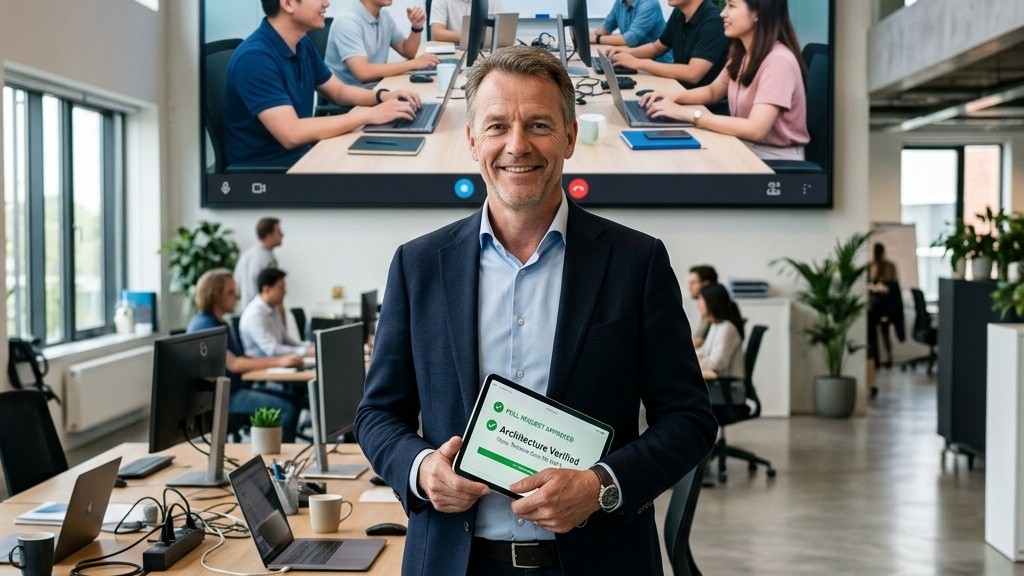
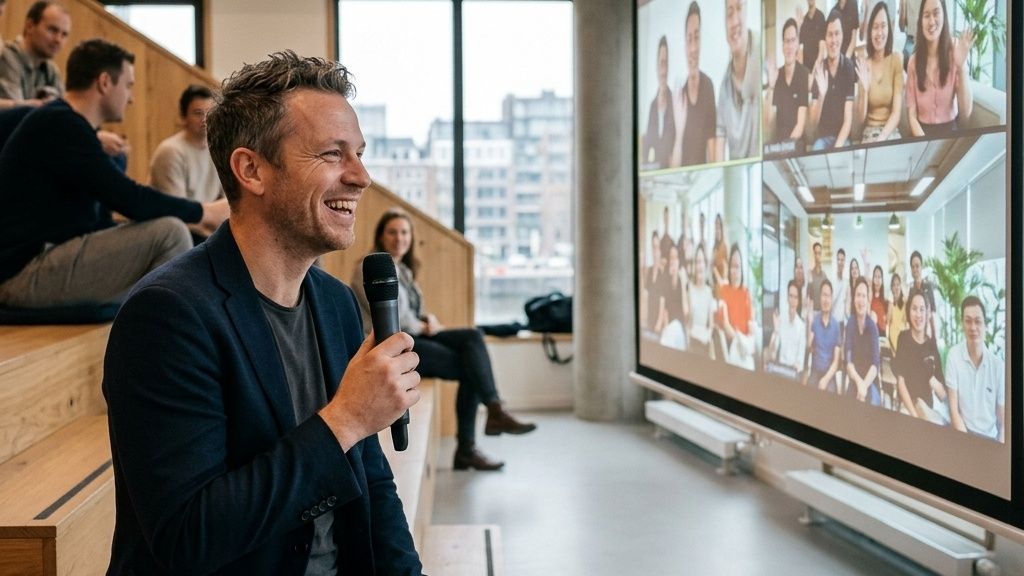
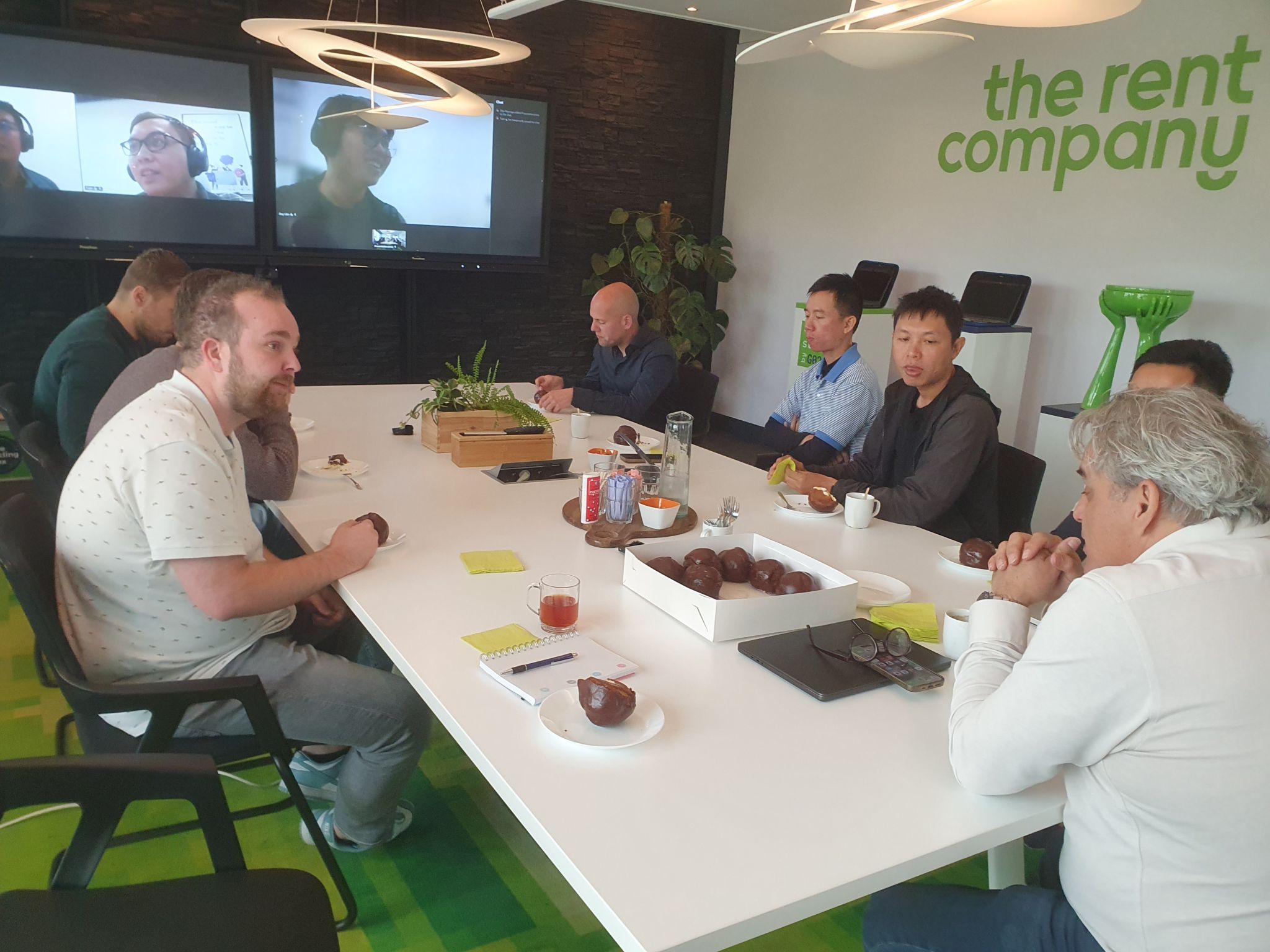
The Dutch-Vietnamese corridor has emerged as particularly productive. Companies like Manifera, with headquarters on Amsterdam’s Herengracht and an engineering hub in Ho Chi Minh City, represent a model that combines Dutch business governance with Southeast Asian engineering depth. The 4-5 hour timezone overlap between CET and GMT+7 enables real-time collaboration every afternoon — a significant advantage over more distant offshore destinations.
Technology Trends Shaping Dutch Software Development
AI-Augmented Development
Over 60% of Dutch development teams now use AI coding assistants (GitHub Copilot, Cursor, Amazon CodeWhisperer). The productivity gains are real — 20-30% faster code production — but the security implications are forcing CTOs to invest in enterprise AI governance frameworks.
Platform Engineering
The “you build it, you run it” DevOps model is evolving into internal developer platforms (IDPs) that abstract infrastructure complexity. Dutch scale-ups like Picnic and Takeaway.com pioneered this approach, and it is now filtering into mid-market companies through tools like Backstage, Humanitec, and Port.
Green Computing
The Netherlands’ position as a global data center hub (AMS-IX is the world’s largest internet exchange) has put sustainable computing on the national agenda. Dutch software teams are increasingly required to optimize for energy efficiency, and frameworks for measuring software carbon intensity are becoming standard in procurement requirements.
What This Means for Technology Buyers
If you are evaluating the Dutch software development market as a buyer, here is what the data tells you:
-
Pure local teams are becoming uneconomical for most companies outside the top 50 tech employers. The salary-to-productivity ratio no longer justifies the premium for non-core engineering functions.
-
The hybrid model is the new default. Dutch management with offshore execution is no longer a cost-cutting tactic — it is a strategic operating model adopted by companies at all stages.
-
Specialization matters more than ever. Generic “full-stack” development shops are commoditized. Look for partners with demonstrated expertise in your specific technical domain.
-
Legal and compliance infrastructure is a competitive advantage. Partners operating under Dutch law, with GDPR-compliant processes and proper data processing agreements, provide a level of legal protection that offshore-only vendors cannot match.
See how Manifera combines Amsterdam business presence with Ho Chi Minh City engineering depth: manifera.com/portfolio.
FAQs
Is the 30% ruling still available for hiring international developers?
Yes, as of 2026 the 30% ruling remains available for qualifying international knowledge workers in the Netherlands, though the maximum duration has been reduced to 5 years and the salary threshold has increased. It remains a powerful incentive but does not solve the fundamental supply-demand imbalance.
How does the Netherlands compare to Berlin or London for tech talent?
Amsterdam offers a higher concentration of fintech and e-commerce expertise than Berlin, and a more internationally diverse talent pool than most European cities. London remains larger in absolute terms but offers significantly higher costs. Amsterdam’s advantage is its combination of talent quality, quality of life, and business-friendly regulatory environment.
Are Dutch software development firms more expensive than other European options?
For pure local development, yes — Dutch firms are among the most expensive in the EU. However, many Dutch-headquartered firms (like Manifera) maintain offshore engineering teams that offer competitive rates while providing the legal and business infrastructure of a Dutch entity.
How does the hybrid offshore model maintain software quality (Scenario: The Netherlands Software Development Scene: A 2026 Landscape Analysis)?
By combining local European account management with elite offshore talent, we ensure nothing is lost in translation. Our Vietnam and Singapore teams follow strict coding standards validated by our lead architects. This ensures your software companies amsterdam initiatives are executed with absolute precision.
How does Manifera guarantee high-quality offshore engineering (Scenario: The Netherlands Software Development Scene: A 2026 Landscape Analysis)?
Our Amsterdam HQ provides strategic oversight while our Vietnam and Singapore hubs handle execution. This dual-shore model ensures European quality standards with offshore scalability. This ensures your software companies amsterdam initiatives are executed with absolute precision.
Suggested Posts





How useful was this post?
Share it with your friends


Get our latest articles here!
Thank you for subscribing to our blog!
Do you have any questions?
Help us improve the content of this Insightful blog by asking us questions. Manifera's team of experts will help you answer these questions as soon as possible.
