
The DevOps Automation Paradox
In modern software engineering, DevOps Automation is no longer a luxury; it is the backbone of high-velocity delivery. Continuous Integration and Continuous Deployment (CI/CD) pipelines allow teams to ship code multiple times a day with confidence.
However, there is a paradox: while automation is designed to increase speed and reduce human error, poorly implemented automation does the exact opposite. It creates brittle pipelines, false positives, and deployment bottlenecks that paralyze engineering teams.
For CTOs partnering with custom software development firms, ensuring that DevOps is implemented correctly is just as important as writing the application code. Let’s explore the most common mistakes in DevOps automation and how to avoid them.
1. Treating CI/CD as an Afterthought
The most common mistake is building the entire application first and attempting to “bolt on” DevOps automation at the very end of the project.
- The Consequence: This leads to massive integration conflicts, environment disparities (the classic “it works on my machine” problem), and delayed launches.
- The Solution: DevOps must be implemented on Day One. The CI/CD pipeline, staging environments, and automated testing frameworks should be the very first software development tools configured before a single feature is coded.
2. Automating Bad Processes
Automation simply speeds up a process. If your underlying deployment process is chaotic, automating it will just cause chaos at scale.
- The Consequence: Automating a pipeline without standardized code review rules, branching strategies (like GitFlow), or robust testing will result in deploying bugs to production faster than ever.
- The Solution: Standardize and optimize your manual processes first. Define strict rules for pull requests, code linting, and peer reviews, and then automate those rules.
3. Ignoring Security in the Pipeline (Lack of DevSecOps)
Many teams automate the build and deploy phases but leave security testing as a manual audit done once a year.
- The Consequence: Vulnerabilities, exposed API keys, and outdated dependencies slip into production, exposing the company to massive data breaches.
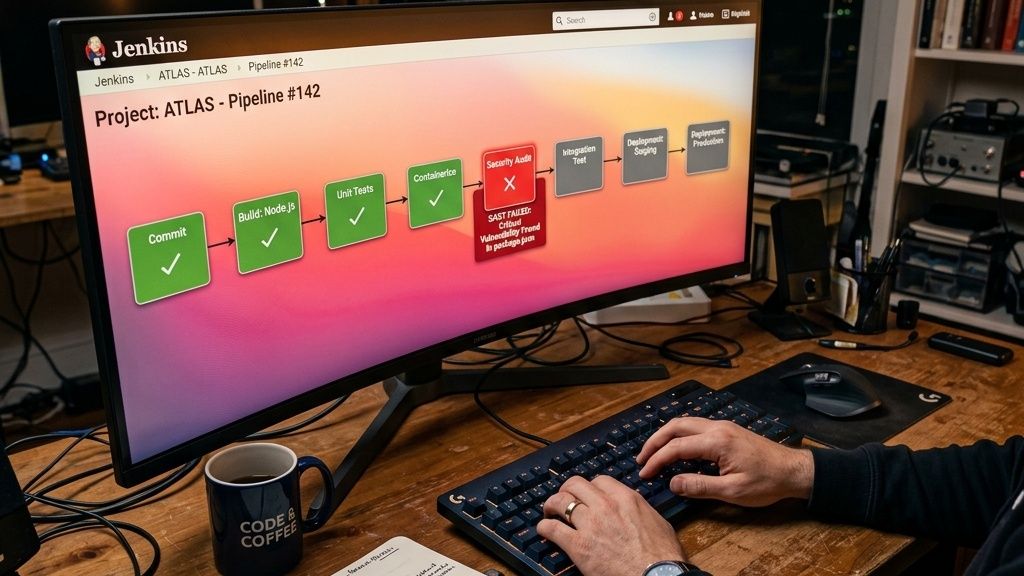
- The Solution: Shift security left. Implement DevSecOps by integrating Static Application Security Testing (SAST) and software composition analysis (SCA) directly into the CI/CD pipeline. The build should automatically fail if a critical vulnerability is detected.
4. Creating Brittle, Monolithic Pipelines
Some teams build massive, monolithic CI/CD scripts that handle everything from linting to database migrations in a single, un-modularized flow.
- The Consequence: If one minor test fails, the entire pipeline crashes, halting all deployments and requiring hours of debugging to find the root cause.
- The Solution: Build modular pipelines. Separate the CI (Integration and Testing) from the CD (Deployment). Utilize parallel execution for testing to speed up the pipeline, ensuring feedback loops for developers remain under 10 minutes.
Mastering DevOps with Manifera
Building resilient, scalable DevOps architecture requires specialized Cloud Engineers and DevOps architects.
At Manifera, founded by CEO Herre Roelevink, we weave DevOps into the fabric of every project we undertake. Operating from our Amsterdam HQ, we design CI/CD architectures that adhere to European security and operational standards.
Our execution hubs in Vietnam and Singapore supply elite DevOps engineers who are masters of modern software development tools (Docker, Kubernetes, GitHub Actions, AWS/Azure). When you partner with Manifera, you don’t just get code; you get a fully automated, scalable infrastructure that allows your business to ship features flawlessly and continuously.
FAQs
What is the difference between CI and CD?
Continuous Integration (CI) is the practice of automatically building and testing code every time a developer commits changes to a repository. Continuous Deployment/Delivery (CD) is the automated process of pushing that validated code into staging or production environments.
Why is my CI/CD pipeline so slow?
Slow pipelines are often caused by running a massive suite of end-to-end (E2E) UI tests sequentially, or downloading large dependencies repeatedly. To fix this, utilize aggressive dependency caching, run unit tests in parallel, and reserve heavy E2E tests for nightly builds.
How does DevSecOps differ from traditional DevOps?
DevSecOps integrates security practices natively into the DevOps workflow. Instead of waiting for a manual security audit, automated security scans (looking for vulnerabilities and exposed secrets) run continuously every time code is committed.
Can Manifera help optimize an existing DevOps pipeline?
Yes. Our dedicated DevOps engineers can audit your current infrastructure, identify bottlenecks, and rebuild your CI/CD pipelines to ensure faster, safer, and more reliable deployments.
What makes Manifera’s offshore model reliable for enterprise projects (Focus: DevOps Automation)?
We bridge the gap between European business requirements and Asian engineering talent. Our architects in the Netherlands ensure that all code delivered by our offshore teams meets strict enterprise-grade quality benchmarks. This is especially critical to ensure your DevOps Automation initiatives are executed with absolute precision.
Suggested Posts








How useful was this post?
Share it with your friends


Get our latest articles here!
Thank you for subscribing to our blog!
Do you have any questions?
Help us improve the content of this Insightful blog by asking us questions. Manifera's team of experts will help you answer these questions as soon as possible.
